


- Home
- >
- News
PLA + PBAT Packaging, The Ultimate Guide to Performance & Compostability
2026-01-20
What is PLA + PBAT? Breaking Down the Components
PLA (Polylactic Acid) and PBAT (Polybutylene Adipate Terephthalate) are both biodegradable polyesters, but with distinctly different properties. Their combination creates a material greater than the sum of its parts.
-
PLA: The Strong, Plant-Based Backbone
-
Source: Derived from renewable resources like corn starch or sugarcane.
-
Properties: Rigid, high-strength, and offers excellent clarity. It provides the structural integrity and barrier properties in the blend. However, pure PLA can be brittle and has limited flexibility.
-
-
PBAT: The Flexible, Durable Enhancer
-
Source: A fossil-based copolymer that is fully biodegradable in composting environments.
-
Properties: Exceptionally flexible, tough, and exhibits high tear resistance. It acts as an impact modifier and plasticizer for PLA, imparting the ductility and softness needed for films and bags.
-
The Synergy: By compounding PLA and PBAT in specific ratios, manufacturers create a material that is:
-
Both strong and flexible.
-
Compostable according to international standards (like TUV HOME Compost & ASTM D6400 & EN 13432).
-
Processable on standard plastic conversion equipment (blown film, cast film, thermoforming).
Why PLA + PBAT Outperforms Single Materials

Key Technical Advantages for Brands & Converters:
-
Superior Mechanical Performance: Achieves the "best of both worlds"—the stiffness of PLA for structure and the elasticity of PBAT for durability, resulting in packaging that doesn't easily tear or crack.
-
Enhanced Processability: The blend has better melt strength and thermal stability than pure PLA, allowing for more consistent, high-speed production of thin films and complex shapes, reducing manufacturing waste and energy use.
-
Reliable Compostability: Both components are certified compostable, and a properly formulated blend ensures the entire product breaks down completely in an industrial composting facility, leaving no microplastics.
-
Food Safety & Versatility: High-quality PLA+PBAT compounds meet FDA and EU food contact regulations, making them safe for a wide range of products from fresh produce to dry goods.
Primary Applications of PLA + PBAT Packaging
This versatility makes PLA+PBAT the go-to choice for numerous packaging formats:
-
Retail & E-commerce Bags: Shopping bags, merchandise bags, and compostable mailers that require puncture resistance and durability in transit.
-
Food Packaging: Fresh produce keep-fresh bags
-
Flexible Pouches: Stand-up pouches (when laminated with other compostable layers) for snacks and dry goods.
-
Rigid Packaging: Through thermoforming, blends with higher PLA content can create Tableware straw, and lids.
Certifications: The Trust Mark for PLA+PBAT Products
A genuine PLA+PBAT product must carry recognized certifications. Look for these seals to ensure credibility:
-
BPI (ASTM D6400): The standard for industrial compostability in North America.
-
OK compost INDUSTRIAL (EN 13432): The leading European certification for industrial composting.
-
DIN-Geprüft: A rigorous German certification based on EN 13432.
-
FDA / EU 10/2011 Compliance: For direct and indirect food contact safety.
Why Choose a Specialist compostable and Biodegradable PLA+PBAT Packaging?
Not all blends are created equal. The performance depends on:
-
The PLA-to-PBAT ratio and the use of functional additives.
-
Expertise in compounding and compatibilization to ensure a homogeneous mix.
-
Advanced printing,
As specialists in high-performance biodegradable compostable packaging, we engineer our GreenTree PLA+PBAT+ compounds to deliver Stable-quality packaging bag and film products.
The Smart Choice for a Circular Future
PLA + PBAT packaging is not a compromise; it's a technologically advanced solution that meets the functional demands of modern packaging while fulfilling the promise of end-of-life compostability. For brands committed to reducing plastic pollution without sacrificing quality or performance, it represents the most reliable and scalable path forward.
Related News
MORE >-
Biodegradable bag, Compostable packaging bag, PLA film, Our Advantage-Greentree
Biodegradable bag, Compostable packaging bag, PLA film Advantage
-

PPWR Compliance: Are PLA+PBAT Compostable Bags Accepted for EU Market?
Confused about EU PPWR rules for biodegradable packaging? Learn whether custom PLA+PBAT compostable bags satisfy PPWR requirements, required certifications & common compliance mistakes. We are a professional manufacturer of tailor-made compostable packaging.
-
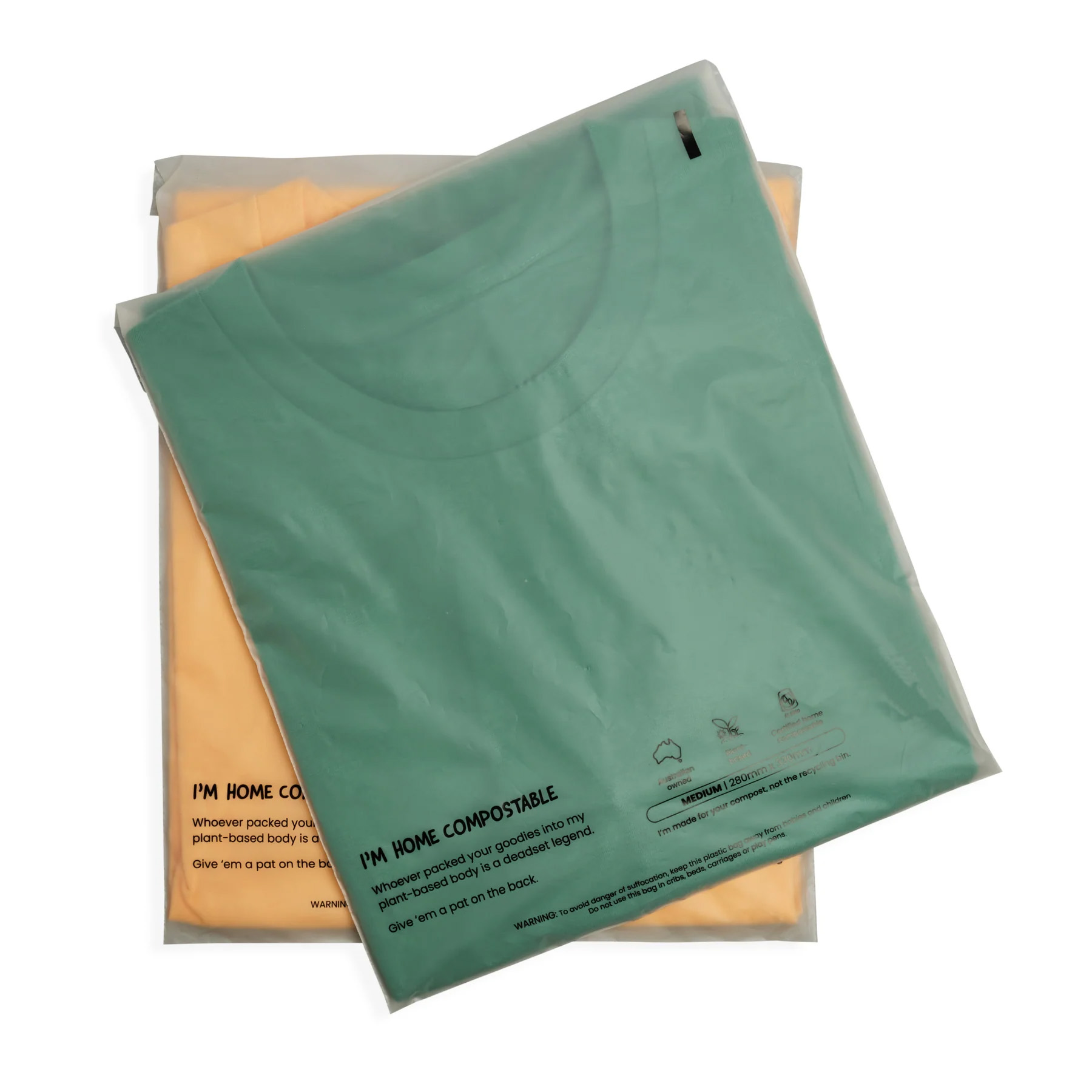
The Ultimate Guide to Packaging Clothes with Greentree Biodegradable Self-Adhesive Bags
Ready to make the switch? Explore the Greentree range of customizable biodegradable self-adhesive bags today and give your clothing the sustainable packaging it deserves.
Consultation